
Indoor air quality has become a top priority across commercial, industrial, and public spaces. From workplaces to schools, good air means healthier occupants, better comfort, and even improved productivity. While HVAC systems play a central role, the choice of air distribution method can significantly influence the overall air quality.
Fabric ducting presents a modern, efficient, and highly adaptable solution that addresses many of the challenges traditional systems face. Here’s how fabric ducting supports healthier indoor environments:
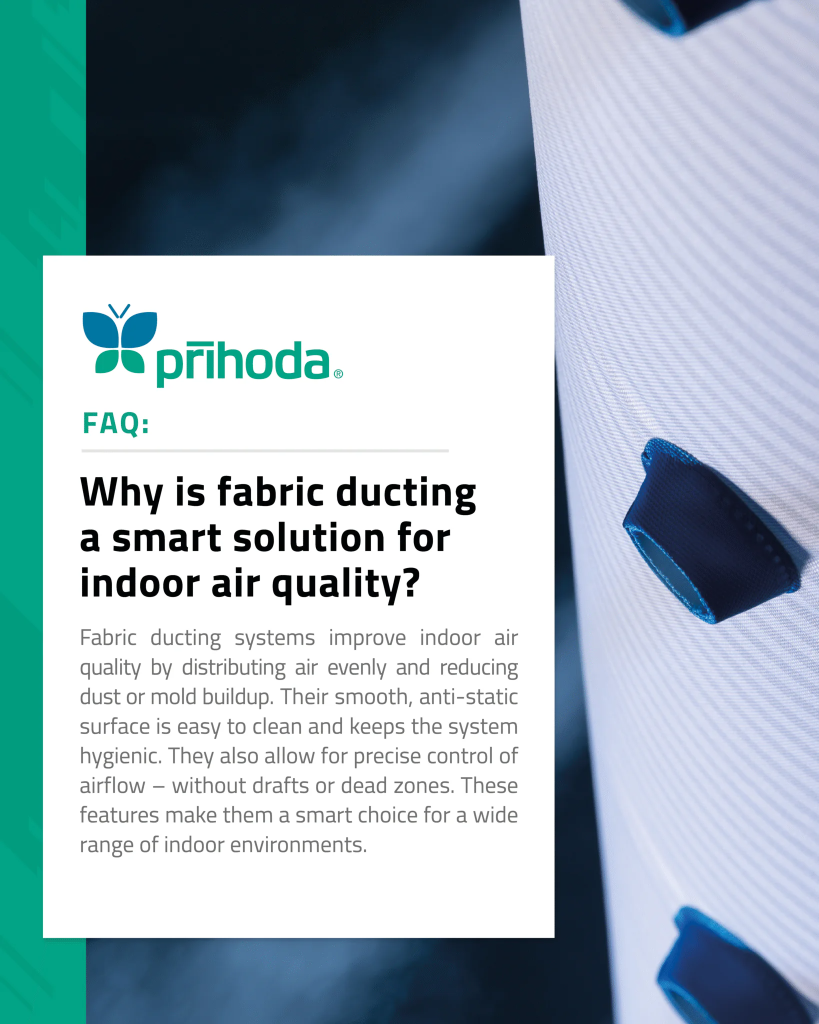
Consistent and Even Air Distribution
One of the most common issues in traditional ventilation systems is uneven airflow — areas with too much air, areas with too little, and the discomfort that comes with it. Fabric ducting eliminates these inconsistencies by diffusing air evenly across the space. Thanks to the permeable surface of the fabric, the air is gently released along the entire length of the duct, ensuring that every part of the room receives a balanced and comfortable flow. This reduces the occurrence of draughts, hot spots, or stagnant zones that compromise air quality.
Reduction of Airborne Contaminants
Fabric ducts are available in materials that are not only washable but also treated with antimicrobial finishes. This means they actively resist the buildup of dust, mold, and bacteria — helping to maintain cleaner air throughout the system’s lifecycle. Unlike traditional metal ducting, which may trap pollutants in hard-to-reach places, fabric ducts can be easily removed and cleaned on a regular basis, promoting a healthier environment and supporting hygiene-sensitive applications.
Quiet Operation in Sound-Sensitive Spaces
Noise generated by HVAC systems is often underestimated, yet it can significantly affect concentration and wellbeing, especially in environments like offices, classrooms, libraries, and healthcare facilities. Textile ducting has natural sound-absorbing properties and is engineered for low-turbulence airflow, making it a quieter alternative to rigid systems. The result is a more pleasant and productive atmosphere, free from the constant hum or whistle of moving air.
Greater Energy Efficiency and Long-Term Sustainability
Every space has its own airflow requirements — and fabric ducting can be fully customised to meet them. From the shape and size of the duct to the placement of nozzles and the level of permeability, each system can be designed to support specific conditions, room functions, or occupancy patterns. Colour and branding options are also available, offering a clean and integrated visual appearance, especially in spaces where design matters.
Tailored Design for Maximum Effectiveness
In summary, fabric ducting offers more than just air delivery. It actively contributes to healthier buildings through better airflow control, hygiene, acoustics, and efficiency. Whether you’re designing a new facility or upgrading an existing one, it’s worth considering a solution that improves the air your occupants breathe — while offering practical and aesthetic advantages along the way.
If you’d like to learn more about how fabric ducting can be tailored for your space, we’re here to help.